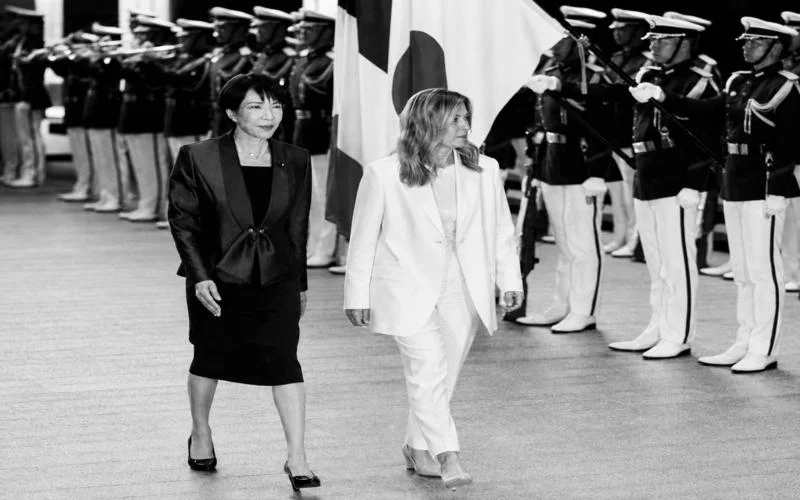
On 16 January 2026, Giorgia Meloni’s visit to Tokyo gave Japan a different image of Italy: not the familiar Mediterranean country of culture, tourism and political volatility, but a European partner whose conservative leadership, industrial ambitions and security agenda could speak directly to Sanae Takaichi’s Japan. The meeting marked the launch of the 160th anniversary of diplomatic relations between the two countries and produced a formal upgrade of bilateral ties to a “Special Strategic Partnership.” In the Japanese government’s own account, the agenda covered security and defence, economic security, critical minerals, supply-chain resilience, artificial intelligence, space, infrastructure, energy, trade and the Indo-Pacific.
That official language matters because it changes the frame through which Italy is seen. In many foreign debates, Italy still appears through inherited stereotypes: beautiful but unstable, culturally magnetic but administratively fragile, strategically useful but rarely central. In Tokyo, Meloni was received inside another vocabulary. Italy was not decorative. It was a partner in advanced defence, industrial coordination and the protection of an international order increasingly shaped by coercion, supply-chain dependence and the return of hard power.
This shift is particularly significant in the Japanese context. Japan has long had a positive cultural perception of Italy: fashion, food, design, art, opera, cars, architecture, lifestyle and craftsmanship. It is an image of elegance and excellence, but also one that can keep Italy inside the softer part of international imagination. Italy is admired, consumed and culturally recognized, yet not always instinctively placed among the countries that define the architecture of security and technology. Meloni’s visit worked precisely because it pushed Italy beyond that older frame. The Italy visible in Tokyo was still the country of style and symbolic familiarity, but it was also a country involved in fighter aircraft, critical minerals, AI governance, space cooperation and supply-chain resilience.
From a Japanese institutional perspective, this is not a minor reputational correction. Tokyo is accustomed to measuring partners through reliability, continuity and operational seriousness. A country may be culturally admired and still be considered politically unpredictable. Italy has often carried that ambiguity abroad: a nation of extraordinary industrial districts and global brands, but also of frequent government changes, fiscal fragility and domestic turbulence. The meeting with Takaichi allowed Meloni to present another version of Italy, one in which political stability under a conservative government becomes an asset rather than a source of concern. For Japanese officials and business circles, the important point was not whether Italy had become less Italian, but whether Italy could be counted on in long-cycle strategic projects.
The personal empathy between Meloni and Takaichi gave this strategic shift a visible form. Both leaders are the first women to head the governments of their respective countries. Both come from conservative political traditions. Both govern societies in which political authority has long been dominated by male leadership. In the joint statement, that shared condition was not treated as an anecdote, but placed next to a wider commitment to a rules-based international order and to global peace, prosperity and stability.
For Japanese observers, this matters in a specific way. Japan’s politics remains deeply marked by hierarchy, continuity and male institutional networks. Takaichi’s rise therefore carries a symbolic burden that is different from, but comparable to, Meloni’s in Italy. The presence in Tokyo of another conservative female prime minister who had already survived the initial foreign doubts about her reliability offered a useful image: female leadership not as liberal symbolism, but as a form of executive authority compatible with national interest, security policy and alliance discipline.
That is one of the most delicate aspects of the Japanese perception of Meloni’s Italy. In parts of the Western debate, Meloni is often read through ideology first: nationalism, conservatism, family policy, migration, relations with the European right. In the Japanese strategic lens, the emphasis is different. The question is less whether Meloni fits a European political category and more whether she makes Italy more predictable, more useful and more present in the international system. Tokyo’s interest in Italy is not built on ideological fascination. It is built on the need for like-minded partners able to connect Europe, the Mediterranean, defence industry and economic security.
It is also a reading shaped by Japan’s own vulnerabilities. Japan depends heavily on stable supply chains, imported energy, advanced technology and secure maritime routes. It lives close to the strategic pressure of China, North Korea and Russia. From that position, Italy is not interesting only as a European cultural power. It becomes interesting if it can help widen Japan’s network of partners beyond the United States, support a rules-based order, contribute to defence innovation and offer a European link to the Mediterranean, Africa and the wider Indo-Pacific conversation. The Italian image that emerges is therefore not glamorous but useful.
This is where the meeting became more than a summit. Meloni’s language was deliberately warm. In her press statement, she said it was important to meet Takaichi in person, to launch a more structured dialogue and to set the next goals together. She also framed the relationship as one that had already moved beyond ordinary diplomacy: three years earlier, Italy and Japan had elevated their ties to a strategic partnership; now, together with Takaichi, they were giving it the form of a special strategic partnership and new momentum under the 2024–2027 Action Plan.
The selfie completed the message in another register. At the end of the meeting, Meloni posted a photograph with Takaichi and a revisited version of the same image in Japanese anime style. Italian media described it as an obvious tribute to Japanese pop culture and as a modern, informal way of narrating diplomacy on social media. The image was playful, but not trivial. In a country where manga and anime are not marginal entertainment but part of a global cultural language, the gesture translated political proximity into a form recognizable to Japanese soft power.
The manga-style selfie worked because it did not replace the strategic agenda. It sat on top of it. Without the defence, technology and economic-security content, the image would have been only a social-media ornament. With the summit behind it, it became a compressed symbol of the new relationship: two distant countries, two female conservative leaders, one formal partnership, and a public language capable of moving from fighter aircraft and critical minerals to cultural codes and personal affinity.
There is another layer in the Japanese reading. The selfie suggested that Italy understood something about Japan that is often missed in purely diplomatic language: Japan’s global image is not only made of ministries, security documents and industrial policy, but also of cultural forms that travel with extraordinary force. By using the anime-style image, Meloni did not simply flatter Japanese taste. She accepted a Japanese code of visibility. For a country such as Italy, whose own global reputation is built on the fusion of culture, industry and style, this was a particularly effective gesture. It allowed Italy to speak to Japan not as an outsider borrowing a symbol, but as another civilization that knows the political value of cultural language.
The first concrete example is defence. Japan and Italy are already linked through the Global Combat Air Programme, the next-generation fighter project developed with the United Kingdom. The Japanese foreign ministry explicitly placed the joint development of the future fighter among the areas in which cooperation would be strengthened. That point is decisive for Italy’s image. A country often described abroad through debt, domestic politics and lifestyle becomes, in the Japanese security lens, part of one of the most advanced military-industrial platforms of the coming decades.
The second example is economic security. The joint statement and the Japanese readout both stressed supply-chain resilience and critical raw minerals at a time of growing international concern over export restrictions. Euronews described the upgraded partnership as focused on critical minerals supply chains and defence cooperation, as both countries seek to reduce dependence on China. For Japan, a country structurally attentive to resource vulnerability and industrial continuity, Italy’s value here is not sentimental. It is connected to Europe, manufacturing, technology and diversification.
The Japanese reading of Meloni is therefore different from some Western European or North American readings of the Italian prime minister. In Tokyo, her ideological profile is less likely to be interpreted primarily through culture-war categories. It is filtered through reliability, alignment and usefulness. Does Italy contribute to the stability of the rules-based order? Does it support Ukraine? Does it understand the Indo-Pacific? Can it cooperate on defence, technology and economic security? The summit was designed to answer yes.
The Diplomat, writing from an East Asian policy perspective, placed Meloni’s visit inside a more complex international order and within the strengthening of Japan-Europe relations. That framing helps explain why the summit mattered beyond the bilateral setting. Japan is looking for European partners that understand that security is no longer regional in the old sense. Ukraine, the Indo-Pacific, economic coercion, energy and technology are increasingly part of the same strategic map. Italy, through this visit, appeared less peripheral to that map than many stereotypes would suggest.
This is the deeper change in perception. Japan does not need Italy to become another Germany, another France or another United Kingdom. Italy’s value lies in a different combination: G7 membership, European and Atlantic anchoring, Mediterranean geography, industrial specialization, cultural power and participation in advanced defence programmes. Seen from Tokyo, this combination can make Italy a connector rather than a marginal actor. It links Europe to the Mediterranean, industrial supply chains to political diplomacy, and soft power to hard-security projects.
The empathy between Meloni and Takaichi also served a reputational function. It softened the form without softening the substance. The smiles, first names and anime-style image made the relationship more visible to the public; the special partnership made it serious to institutions, business and defence communities. For Japan, this combination is valuable. It shows Italy as a country able to speak both the language of statecraft and the language of symbolic proximity.
The Italy that emerged in Tokyo was not the Italy of postcard diplomacy. It was an Italy seeking recognition as a serious strategic actor: European, Atlantic, Mediterranean, industrial and increasingly attentive to the Indo-Pacific. In the Japanese mirror, Meloni’s visit showed a country whose cultural familiarity could open the door, but whose real weight depended on defence projects, supply chains and political continuity. The manga-style selfie remained as the visible image of the day, but behind it stood something much less decorative: a Japan willing to see Italy not only as a friend, but as a partner useful to the architecture of the next order.