By late June 2026, Italy has entered the American tariff debate not through steel, cars, wine or luxury goods, but through the taxation of digital power. Donald Trump’s threat to impose a 100% tariff on countries that maintain or introduce a digital services tax against American technology companies places Rome in a sharper and more uncomfortable position than the familiar transatlantic arguments over industrial exports. In this American reading, Italy is no longer only a political ally, a NATO member, or the European country led by Giorgia Meloni, often described in Washington’s conservative circles as one of the most ideologically compatible leaders on the continent. It is also one of the European states that taxes the revenues of global platforms.
That distinction matters because it changes the category in which Italy is being seen. The country is not being treated simply as a friendly government with privileged political access to the Trump world. It is being placed among the European jurisdictions that Washington sees as using national tax systems to extract revenue from American corporate champions. France and Spain are more visible in the long-running American dispute over digital taxation, but Italy belongs to the same group. Its 3% tax on certain digital services makes it part of the problem as framed by the American administration: not an exceptional partner, but a participant in a European fiscal front.
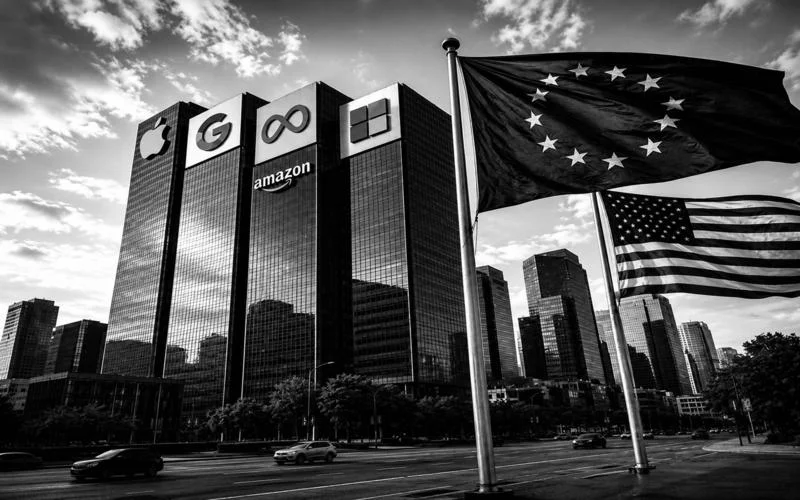
The American business press has often described digital services taxes as measures that fall disproportionately on companies such as Google, Apple, Meta and Amazon because those firms dominate the markets being taxed. The U.S. Trade Representative had already treated Italy’s measure in those terms during the previous round of Section 301 investigations, when Washington concluded that digital taxes adopted by countries including Italy and Spain discriminated against American digital companies. The language now used by Trump is more direct and punitive, but the underlying American interpretation is not new. Digital taxation is read less as a technical budget measure than as a targeted challenge to U.S. commercial power.
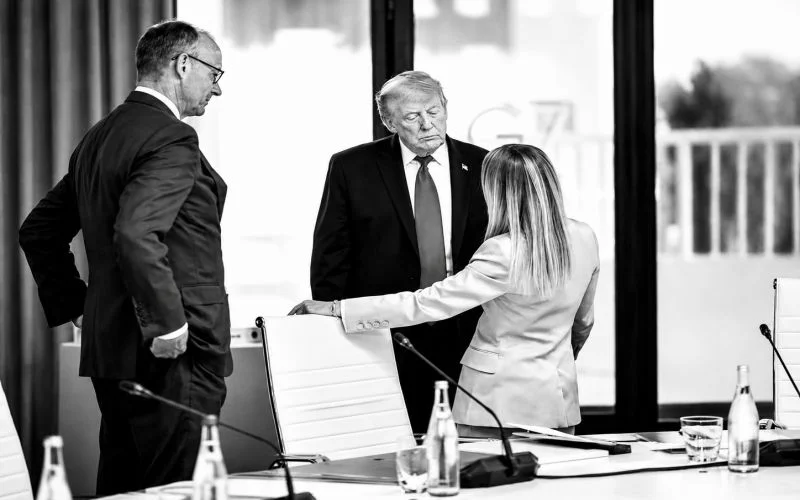
For Italy, this creates a reputational short circuit. Meloni’s political relationship with Trump may help Rome appear in Washington as a more familiar and less hostile European actor. But the digital tax pushes Italy back into another frame: that of the European state willing to regulate and tax American technology companies in the name of fiscal sovereignty. The two images coexist without cancelling each other. Italy can be politically legible to the American right and economically exposed to American retaliation at the same time.
The contrast with the August 2025 EU-U.S. tariff framework is revealing. That agreement, built around a 15% tariff threshold for EU-origin goods, was presented as a way to prevent a broader trade war and restore a degree of predictability to transatlantic commerce. The 100% threat over digital services taxation belongs to a different register. It is not a negotiated ceiling but a punishment. It signals that when the issue is Big Tech, Washington is prepared to move from managed friction to coercive escalation.
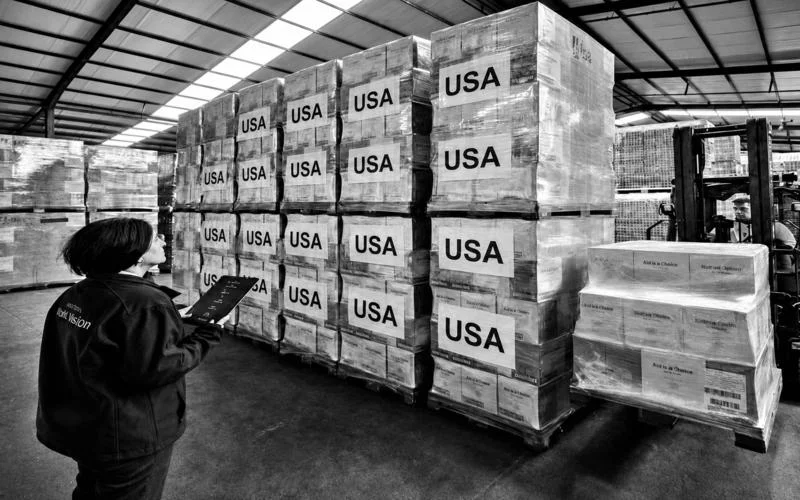
This matters for Italian business because the retaliation threatened by Trump would not fall on digital taxation itself. It would fall on goods sent to the United States. The sectors potentially exposed are precisely those through which Italy is most recognizable in the American market: fashion, machinery, food, wine, design, pharmaceuticals, components and high-end manufacturing. A tax aimed at digital platforms could therefore become a cost imposed on exporters that have no direct relationship with the tax. In the American logic of retaliation, the Made in Italy economy becomes leverage in a dispute over Silicon Valley.
That is why the episode is not only technological. It is financial, diplomatic and reputational. Italy’s digital services tax may be designed as a fiscal instrument, but from Washington it is read as part of a broader European attempt to discipline the largest American platforms through taxation, antitrust rules and market regulation. The Italian case becomes a small but meaningful piece of a larger American anxiety: that Europe, unable to produce companies of comparable scale, is using law and taxation to constrain those it did not create.
There is an obvious simplification in that view. Digital taxation in Europe also reflects a long-standing debate about where value is created, where users are located, and how governments should tax companies whose profits can be booked far from the markets that generate them. Italy is not acting as an isolated anti-American state. It is participating in a wider European and OECD-era debate over the taxation of digital business models. Yet foreign perception rarely preserves all the complexity of the policy file. In the American tariff debate, the Italian measure is compressed into a simpler image: Italy is one of the countries taking money from American tech.
That compression is politically significant for Meloni. Her proximity to Trump can be presented domestically as a diplomatic asset, but this dispute shows the boundary of personal political alignment. In Washington’s commercial grammar, friendship does not automatically protect a country when the perceived target is a strategic American industry. Big Tech is not only a corporate sector; it is part of U.S. economic influence, capital market strength, technological leadership and geopolitical reach. When that sector is framed as being attacked, even friendly governments become negotiable pressure points.
The Italian image that emerges from this American angle is therefore ambiguous: close but not exempt, familiar but not protected, politically compatible but structurally European. Rome appears as a bridge only until the dispute touches the architecture of American economic power. Then it becomes part of the European shore.
For Italian companies, the risk is not merely that tariffs may rise. It is that the country’s economic identity abroad can be reshaped by disputes originating far from its own industrial base. A handbag, a bottle of wine, a machine tool or a pharmaceutical shipment can suddenly be caught in a conflict over digital taxation. Seen from Washington’s tariff politics, Italy’s closeness to Trump does not remove its exposure. It makes the exposure more visible, because it shows that even a friendly Italy can become a counterparty when the wall being defended is Big Tech.