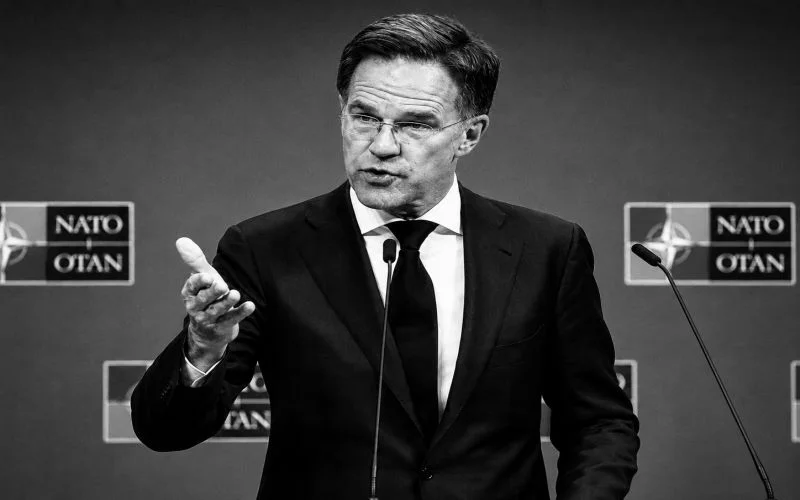
The Italian controversy over Operation Epic Fury began with a television claim made in the United States. In a Fox News interview reported on 24 June 2026, NATO Secretary General Mark Rutte said that around 500 US aircraft had taken off from American bases in Italy in support of the campaign against Iran, while the wider European contribution amounted to between 4,000 and 5,000 flight missions. Rome immediately pushed back. The Italian government insisted that it had authorised only technical and logistical, non-kinetic activities under existing agreements, not Italian participation in combat operations.
That is why the episode matters beyond the domestic dispute over parliamentary authorisation or government transparency. Seen from the United States, it exposes a more delicate image of Italy: a country structurally central to American military reach, yet politically determined to separate the availability of bases and logistics from participation in war.
The distinction is precisely what Rutte’s remarks blurred. In seeking to answer American frustration with European allies, the NATO secretary general did not cite an Italian speech, a diplomatic statement or a parliamentary vote. He cited aircraft. In the American political grammar of this moment, those numbers were meant to prove alliance loyalty: bases functioned, aircraft moved, Europe enabled American force projection.
Operation Epic Fury had already been framed in Washington through scale. U.S. Central Command formally launched it on 28 February 2026 at 1:15 a.m.; by its 18 March fact sheet, CENTCOM was listing more than 8,000 combat flights and more than 7,800 targets struck. Against that backdrop, Rutte’s figures were not marginal. They placed Italy inside the operational architecture of an American-led war, even as Rome insisted that the country remained outside its combat dimension.
This is where the American lens becomes revealing. For parts of the US debate, especially the media and political environment to which Fox News speaks, alliance solidarity is increasingly measured less by legal nuance than by operational output. Did bases function? Did aircraft move? Did allies facilitate American force projection? In this reading, Italy appears less as a hesitant European capital than as a strategic platform whose value is measured on runways, air corridors and logistics schedules.
Rome’s reaction moved in the opposite direction. The Italian Defence Ministry said that only technical and logistical, non-kinetic activities had been authorised under existing agreements, and that requests outside that perimeter had not been approved. NATO later narrowed Rutte’s words, saying he had referred to the implementation of existing bilateral arrangements on bases and overflights. The correction matters legally. But from the American military perspective, the correction also confirms the deeper point: Italy’s importance lies in the space between permission and participation.
This is not a minor space. Italy hosts one of the densest US military footprints in Europe, with Aviano in the north and Sigonella in Sicily standing as two names that are far more familiar to American military planners than to much of the wider public debate. Sigonella, often described in US naval language as a Mediterranean hub, is not merely a Sicilian base. It is a logistical hinge between Europe, North Africa and the Middle East. Aviano, with its combat-airpower mission, gives the Italian map a direct place in American contingency planning. When US military media such as Stars and Stripes followed the dispute, the story was not treated simply as a Rome political quarrel. It was a question of what had moved, from where, under which authorisations, and with what military meaning.
For Italy, this produces an uncomfortable visibility. Abroad, and particularly in the American strategic conversation, the country often becomes visible not through its public diplomacy but through the infrastructure it hosts. The government may insist that respecting bilateral agreements does not mean entering a war. That is a defensible institutional line. Yet the external image formed by the episode is more ambiguous: Italy is seen as indispensable enough to be cited when Washington complains about Europe, but constrained enough to reject the language of direct involvement.
That ambiguity has reputational consequences. In Washington’s political atmosphere, where Donald Trump’s criticism of European allies has turned burden-sharing into a loyalty test, Italy risks being read in two conflicting ways at once. One reading sees it as a country that quietly helped when it mattered. Another sees it as a country that wants the benefits of alliance centrality without paying the political price of open alignment. Rutte’s interview tried to defend the first interpretation. The Italian government’s clarification was designed to prevent the second from becoming an accusation at home and abroad.
The business and institutional implications are concrete. For defence companies, logistics operators and strategic industries tied to the transatlantic security system, Italy’s position remains valuable precisely because American forces can rely on a mature network of bases, personnel, maintenance chains and host-nation arrangements. For investors and international partners, however, the same episode shows that infrastructure alone does not settle political risk. A base may be available for logistics, but the political meaning of its use can change quickly when a war, a television interview and parliamentary scrutiny collide.
The Iranian reaction added a further layer. Tehran seized on Rutte’s words to accuse Italy and Romania of complicity. That is not the American reading, but it shows how easily technical cooperation can be transformed into diplomatic exposure. What Washington may describe as support, what NATO may classify as treaty implementation and what Rome may define as non-kinetic activity can become, in another capital, evidence of participation.
This is the Italy that emerges from the American mirror on 27 June 2026: not a marginal ally, not a neutral bystander, and not a fully unambiguous belligerent partner. It is a country whose geography gives it strategic weight, whose legal framework limits political ownership of that weight, and whose international image is shaped by the distance between what its bases allow and what its government is willing to call involvement.
The episode leaves Italy visible in a way that speeches rarely do. Not at a summit podium, but on the flight line; not in a doctrine, but in a clearance; not as an abstract European partner, but as a Mediterranean platform where American power, Italian law and alliance politics meet before an aircraft takes off.