On 17 March 2026, Donald Trump turned the war against Iran into a test of allied loyalty, accusing NATO partners of making “a very foolish mistake” after they resisted his call to help the United States secure the Strait of Hormuz. The setting was not a NATO summit, but the Oval Office, during a meeting with Irish Taoiseach Micheál Martin. The sentence that mattered was less military than political: the United States, Trump said, did not need the help, but the allies “should have been there.” In the American reading opened by that phrase, support was no longer measured only by treaties, bases or communiqués. It became a question of visible readiness to stand with Washington when the United States asked.
Italy was not the explicit target of Trump’s first public outburst. Yet it belongs naturally inside the question he raised. Few European allies are as geographically relevant to American power in the Mediterranean and the Middle East. The Italian peninsula sits between continental Europe, North Africa and the eastern Mediterranean; Sicily, in particular, is part of the operational geography through which Washington reads crises that move from the Gulf to the Mediterranean. For an American audience, therefore, Italy is not only a political ally or a NATO member. It is part of the infrastructure of reach.
That is why Trump’s complaint matters for Italy’s image, even before Italy is named. ABC News, in coverage aimed at a broad American audience, framed the episode around the refusal of NATO allies to assist the United States in securing a passage through which roughly one-fifth of the world’s oil supply was caught in the war’s crossfire. The same report noted that oil prices were hovering around $100 a barrel and that the U.S. national average for gasoline had reached $3.79 a gallon, about 88 cents higher than a month earlier. In that public frame, allied reluctance was not an abstract diplomatic disagreement. It was connected to energy prices, shipping, inflation and the domestic political cost of war.
For Italy, this creates a particular reputational tension. In normal Atlantic language, Rome can present itself as a loyal, stable and strategically placed partner. In Trump’s language, however, loyalty is less institutional and more transactional. The question is not only whether Italy belongs to NATO, hosts American forces or supports Western security in principle. The question becomes whether Italy is perceived as present when Washington asks for operational help in a politically risky theatre.
Forbes, in American business-political coverage, captured the sharper edge of the episode: Trump wrote that “most” NATO allies did not want to be involved in the U.S. and Israeli war against Iran, while insisting that the United States did not need anyone’s help. That combination is characteristically Trumpian. It turns allied restraint into both an accusation and a performance of American self-sufficiency. The allies are portrayed as unnecessary, but also as failing a test.
This is the space in which Italy’s image becomes ambiguous. A country can be indispensable in geography and cautious in politics at the same time. It can be useful to American operations without wanting to be seen as a direct participant in a war. It can host infrastructure that gives Washington strategic depth while maintaining a domestic distinction between alliance cooperation and political alignment with every American military choice.
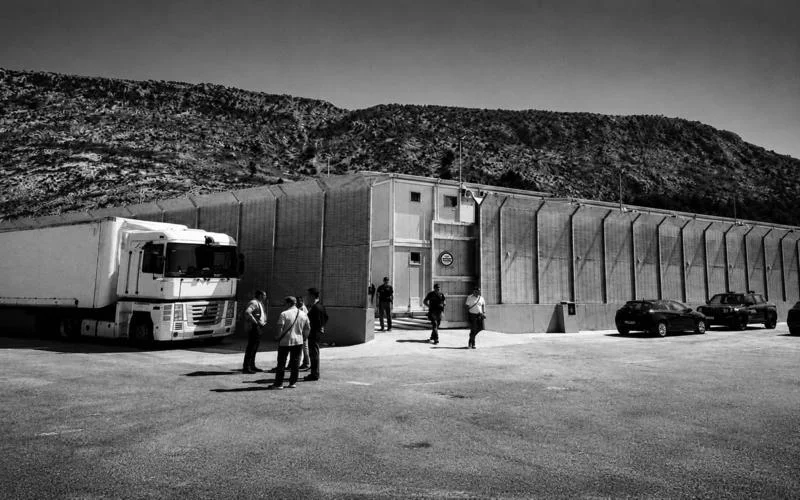
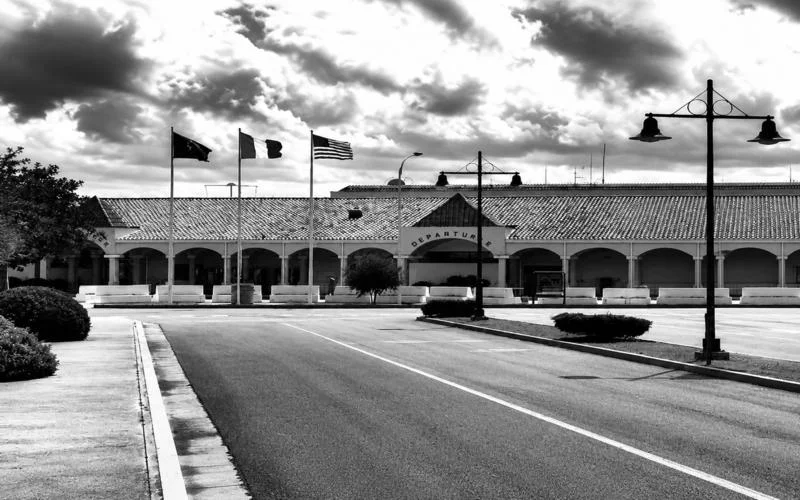
The American military map makes that distinction difficult to sustain in public perception. Associated Press reporting from 2025 described Naval Air Station Sigonella, in Sicily (pictured), as a base for the Italian Air Force that provides command and control for U.S. and NATO forces and a strategic Mediterranean location for deployment across Europe, Africa and Asia. It also noted the presence of U.S. Navy P-8 Poseidon reconnaissance aircraft, MQ-4C Triton drones and U.S. Space Force personnel involved in identifying possible missile threats. In military terms, this is infrastructure. In political terms, it is visibility.
That visibility is why Italy cannot remain outside the American argument for long. When Trump says allies “should have been there,” countries with symbolic statements matter less than countries with usable geography. Italy is one of those countries. Its value to the United States is not theoretical. It is embedded in airfields, naval access, intelligence functions, logistics, communications and the wider Mediterranean posture of American power.
The first concrete implication is strategic. If Washington comes to read European caution as evasion, Italy risks being placed in the same mental category as allies that benefit from American protection but hesitate when American policy becomes costly. This does not mean that U.S. officials would suddenly consider Italy irrelevant. The opposite is more likely. Italy matters precisely because it is useful. The reputational risk is that usefulness may be interpreted as insufficient if it is not accompanied by open political support.
The second implication is economic. Hormuz is not merely a naval passage. It is a price mechanism for energy, freight, insurance and industrial planning. When American coverage links allied reluctance to oil supply and gasoline prices, the question of NATO support moves into the language of households, firms and markets. For Italian exporters, manufacturers and energy-intensive sectors, the way Washington narrates European reliability can become part of a broader atmosphere of trust, bargaining power and political access.
Time, writing for a general American political readership, described Trump’s frustration as aimed at NATO allies’ lack of action in the Iran war. That wording matters. “Lack of action” is a simpler and harsher category than diplomatic caution. It compresses legal limits, parliamentary constraints, public opinion and strategic prudence into one impression: absence. In that compression, Italy’s problem is not only what it does. It is whether its caution is legible in Washington as responsibility or dismissed as reluctance.
The image of Italy produced by this American moment is therefore not one of marginality. It is the image of a necessary ally caught between infrastructure and exposure. Italy is central enough to matter to American military planning, but politically careful enough to risk being absorbed into Trump’s wider complaint about Europe. From this American angle, the Italian question is not whether Rome belongs to the Atlantic alliance. It is whether a country that gives the United States strategic depth in the Mediterranean can avoid being judged by a president who treats alliance loyalty less as a structure than as an immediate act of presence.