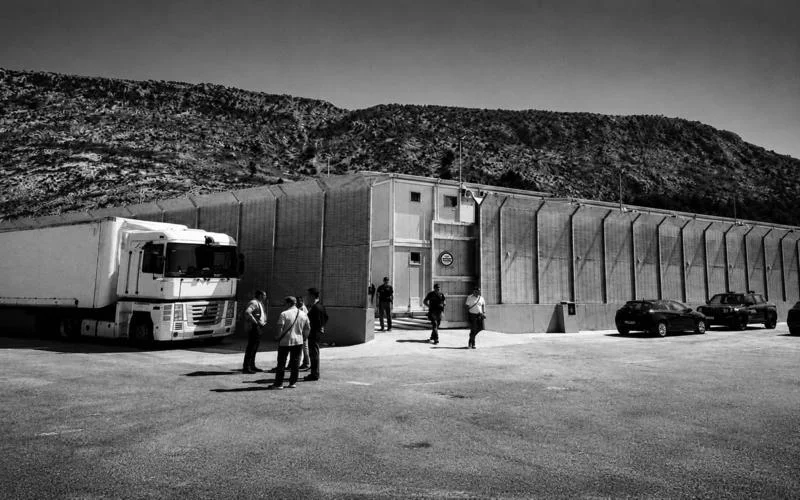
What began as a bilateral experiment between Rome and Tirana has now become, in the German reading, something more demanding: a test of whether political will can be translated into enforceable European law. The Italy-Albania migration scheme was born formally on 6 November 2023, when the Italian and Albanian governments signed in Rome the protocol for strengthening cooperation on migration. By 2025, however, the question visible from Germany is no longer simply whether Italy can operate two centres on Albanian soil. It is whether Italy can make an ambitious migration policy survive contact with courts, EU law and the discipline of institutional predictability.
That distinction matters in the German lens. Migration is also a central political question in Germany, but German debate tends to treat the issue through a particular grammar: legality, administrative capacity, European coordination and the separation of powers. From that angle, Italy’s Albania model is not observed only as a hardline policy or as a Mediterranean emergency response. It becomes a practical stress test of the European legal order.
German coverage has framed the Italian case in precisely those terms. ZDF described the European Court of Justice ruling as a further setback for Giorgia Meloni’s prestige project, noting that Italy was the first EU country to attempt the processing of asylum procedures outside the Union in Albania. Die Zeit, following the judicial reversals earlier in the year, reported that more than 40 migrants detained in Albania had to be brought back to Italy after a Rome court ordered their transfer into the EU. In this framing, the central drama is not theatrical confrontation between government and judges. It is the narrower, more consequential question of whether an externalised asylum mechanism can be made compatible with European judicial guarantees.
The numbers help explain why the matter is read abroad as more than symbolism. The Albanian facilities were presented as capable of handling up to 3,000 people a month, while the project has been associated with a cost of about €670 million over five years. In January 2025, Italy sent 49 people to Albania in an attempt to relaunch the scheme, while arrivals by sea in that month were reported at more than 3,000. These figures create a tension that German observers are quick to notice: a large institutional machine built for deterrence and acceleration can become reputationally fragile if every operational movement is exposed to judicial reversal.
This is where the European Court of Justice changes the meaning of the Italian experiment. In the Alace and Canpelli judgment of 1 August 2025, the Court did not abolish the idea that a member state may designate countries as “safe countries of origin”. But it placed that political choice under judicial control. Such designations must be reviewable by courts; the sources on which they are based must be accessible enough for applicants and judges to challenge and examine them; and a country cannot be treated as safe if the required conditions are not satisfied for certain categories of persons. In German terms, the message is clear: administrative speed cannot be bought at the price of opacity.
This is why Germany is a particularly revealing mirror for Italy. The German government itself is seeking a tougher and more orderly migration policy, with stronger control of irregular migration and closer coordination with European partners. German political debate is not immune to pressure for acceleration, deterrence and simplification. But precisely because Berlin is also searching for faster procedures, Italy’s case becomes useful as a warning and a precedent. It shows that the decisive question is not whether governments want firmer migration management. The decisive question is whether they design it in a way that courts can recognise as lawful.
The image of Italy that emerges is therefore complex. Italy appears politically energetic, willing to innovate and capable of forcing a European discussion that many governments prefer to postpone. Rome has transformed a national pressure point into a continental experiment. Yet the same episode also projects an Italy institutionally exposed: a country where political imagination can move faster than legal architecture, and where announcements risk preceding the operational conditions needed to make them durable.
For a German institutional audience, that gap matters. It does not concern only migration. It touches the broader perception of Italy as a partner in European governance. When a government builds facilities, mobilises personnel, allocates hundreds of millions of euros and then sees the execution repeatedly blocked by courts, foreign observers do not only ask whether the policy is right or wrong. They ask whether the Italian state has aligned political strategy, legal design, administrative planning and European constraints before moving. That is a question of credibility.
The business and institutional implications are concrete. A company considering participation in public contracts linked to border management, logistics, security services or infrastructure will read legal uncertainty as execution risk. A European partner assessing future Italian proposals in energy, defence, migration or industrial policy will ask whether Rome’s political commitments are supported by a stable procedural foundation. In this sense, the Albania centres become more than migration infrastructure. They become an example of how reputational risk is produced when policy innovation is not matched by legal predictability.
The German reading is not necessarily hostile to Italy. It may even recognise in the Italian attempt a degree of political initiative often missing in European migration policy. But admiration for initiative is different from confidence in execution. From parts of the German debate, Italy appears as a country able to open a frontier of policy, yet not always able to secure the institutional ground beneath it. The visible Italy is not weak; it is overexposed. It leads, but under legal strain.
That is the deeper meaning of the judicial block and the European litigation. Italy has made itself the laboratory of externalised asylum management. Germany, watching through the lens of EU law and the Rechtsstaat, sees that laboratory less as a question of slogans than of architecture. The Italian case suggests that in Europe, migration policy cannot be measured only by the firmness of its political intention. It is measured by whether that intention remains valid when translated into rights, courts, evidence, procedures and review.
From this external angle, the Albania model does not simply test Italy’s ability to control arrivals. It tests the reliability of Italy’s governing method when national urgency enters the European legal system. And in the German mirror, that is the point on which the image of Italy now turns.